




Disaster debris piling up after a catastrophe, demolition waste with no viable transport routes, or a suddenly disrupted township waste transfer station—these scenarios share a common challenge. The problem is not that the waste cannot be processed, but that fixed facilities cannot be built in time or deployed where they are needed. When waste accumulates faster than collection and transportation systems can respond, the solution lies in equipment that is ready to work wherever it arrives.
Mobile crushers and intelligent mobile waste compaction equipment are two key solutions to this challenge. One enables the on-site recovery of construction and demolition waste, while the other delivers on-site volume reduction for municipal solid waste.
The urgency of construction and demolition waste management is reflected in China's policy targets. By 2027, the average recycling and resource utilization rate of construction and demolition waste in cities at prefecture level and above is expected to exceed 50%, with many regions setting targets of 75% or higher. Yet in practice, large volumes of construction waste still follow a linear route of transportation, stockpiling, and subsequent processing. Transportation alone represents a significant cost, particularly in post-disaster recovery and demolition projects.
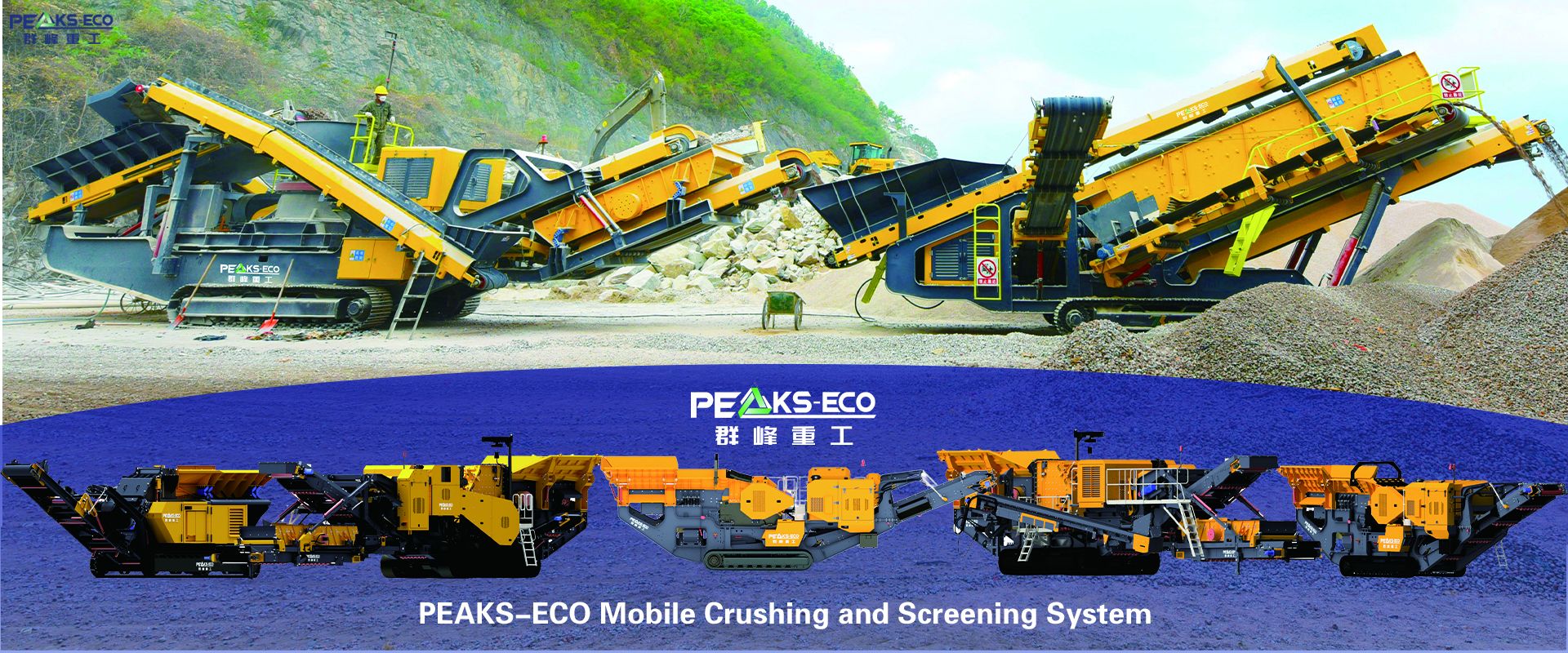
The key advantage of mobile crushers is that they bring processing directly to the point where waste is generated. The "mobile crushing + on-site recycling" approach can significantly reduce waste management costs.
Take PEAKS-ECO's Mobile Twin-Shaft Synchronous Crusher as an example. It delivers powerful crushing performance, with discharge sizes continuously adjustable from 80 to 400 mm, helping produce high-quality recycled aggregates. The machine offers flexible power configurations, including diesel engine and electric drive options, to suit different operating environments.
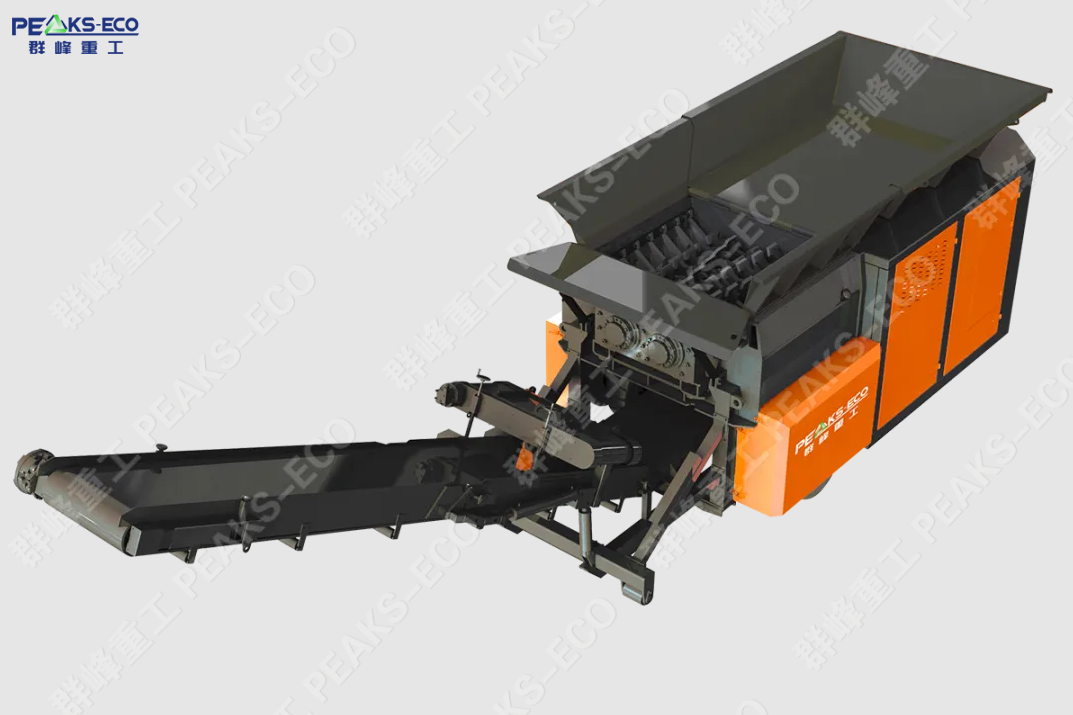
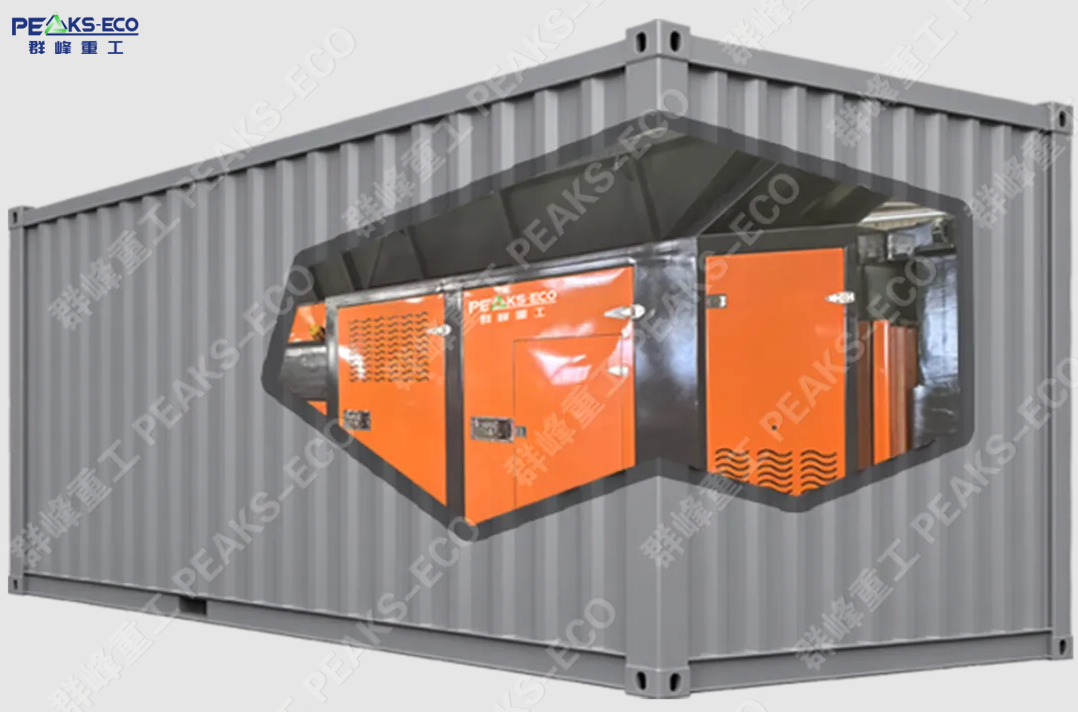
Designed for convenient transportation, the equipment can be shipped in a standard container. Its main crushing shafts can be quickly dismantled, and interchangeable cutter shafts can be installed to accommodate different waste materials and crushing requirements. These features enable rapid relocation between job sites and flexible deployment wherever processing is needed.
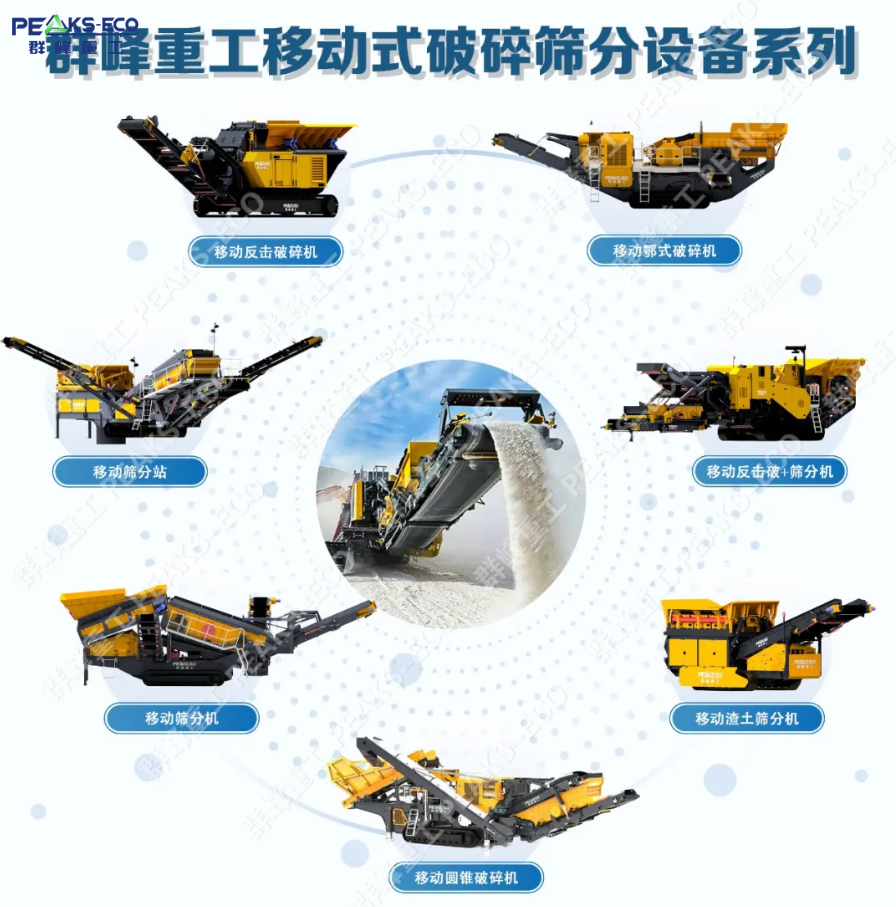
In post-disaster reconstruction, mobile crushing and screening equipment can process concrete blocks, bricks, and demolition rubble directly on-site, transforming them into recycled aggregates for temporary road subbases and reconstruction foundations. Instead of treating all debris as waste that must be hauled away, valuable materials can be recovered and reused where they are needed.
Operational flexibility is another major advantage. Wheeled mobile crushing plants can be towed by vehicles and offer tight turning radii. Their integrated design reduces the need for separate equipment foundations and extensive site preparation. Tracked mobile units, meanwhile, use fully hydraulic drive systems to deliver strong mobility and better adaptability to challenging terrain.
Unlike construction waste recycling, emergency municipal solid waste management focuses on volume reduction and pollution prevention. When a fixed transfer station is damaged by a disaster or forced to shut down due to overcapacity, accumulated waste can quickly produce leachate and unpleasant odors, creating secondary environmental risks.
Mobile waste compaction equipment is designed specifically for scenarios where building or accessing a permanent waste transfer station is not feasible.
PEAKS-ECO's Intelligent Mobile Waste Compaction System, for example, uses horizontal compaction technology. Compared with similar products on the domestic market, it offers advantages in sealed waste handling, structural layout, mechanism optimization, automation, and ease of operation.
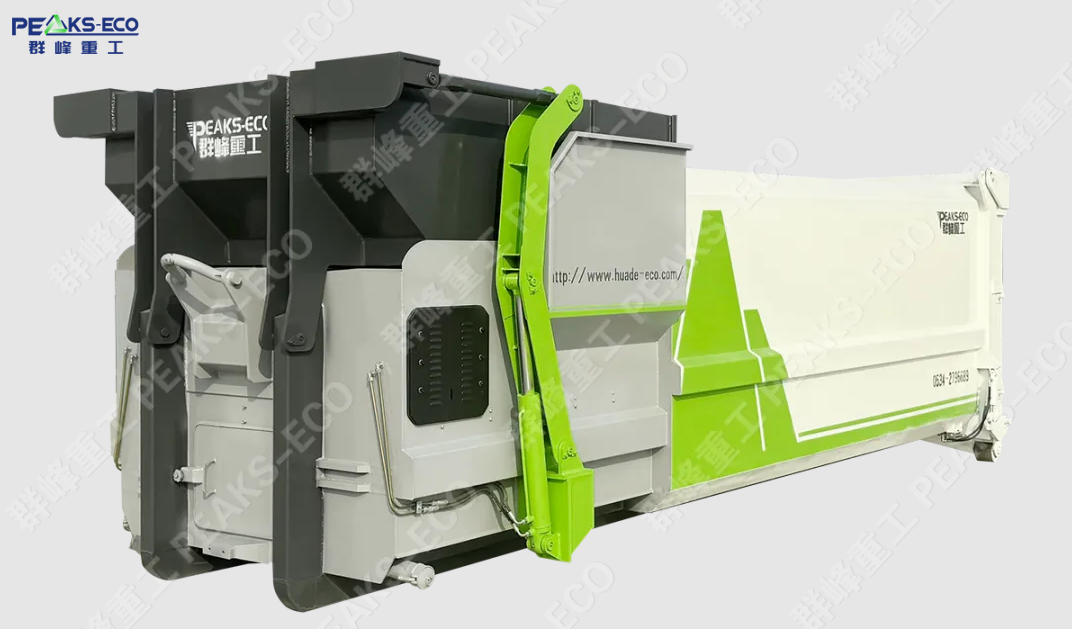
The unit can be relocated as part of waste transfer operations without requiring a dedicated permanent site. This reduces civil construction costs and installation time while making better use of available space. Its streamlined appearance also helps maintain the visual quality of the surrounding environment.
More importantly, the system provides a high level of sealing throughout waste collection, compaction, and transportation. This helps prevent waste leakage and effectively minimizes the risk of secondary pollution.
Although these two types of equipment serve different applications, they share the same underlying principle: using mobility to overcome the limitations of fixed infrastructure.
Construction waste is often generated suddenly and in concentrated volumes, while the site selection, environmental approval, and construction of a permanent crushing line may take too long to meet immediate needs.
Municipal solid waste faces a different challenge. Transfer stations are among the most infrastructure-intensive links in the waste management chain. If a station becomes inoperable, both upstream collection and downstream disposal can be disrupted.
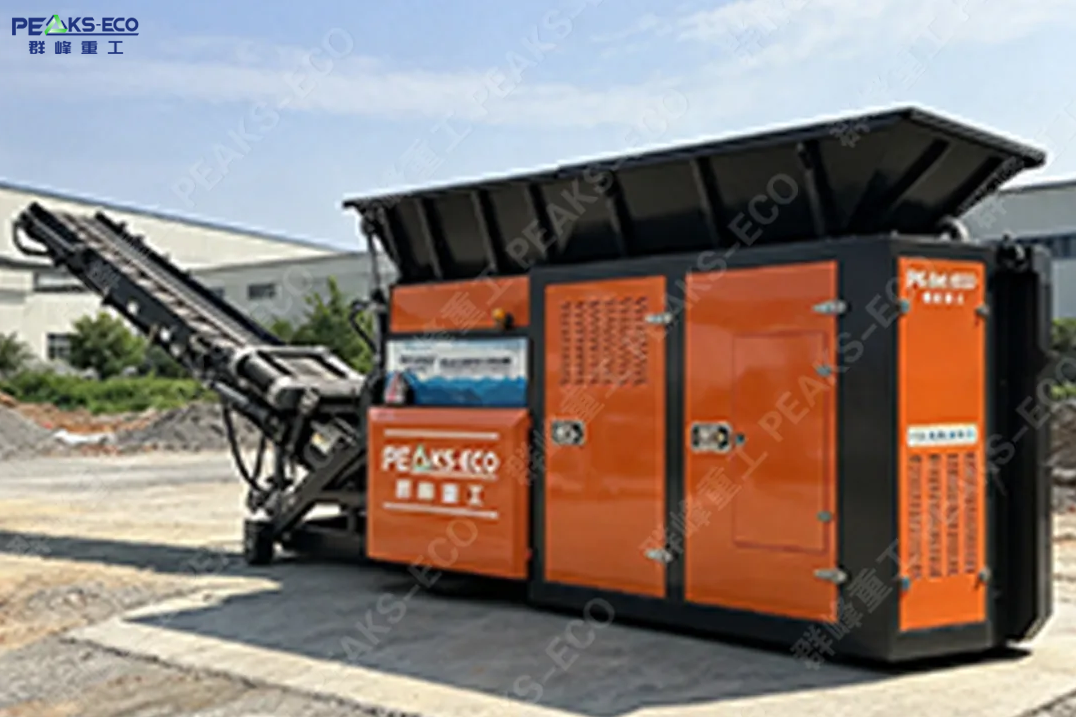
Mobile crushers bring processing capacity directly to the waste, while intelligent mobile compactors make the transfer function mobile. Both reduce the industry's rigid dependence on permanent sites and fixed facilities.
Waste will not wait for infrastructure to be completed. The real value of mobile equipment lies in making waste processing capacity respond as quickly as waste is generated—turning rubble into reusable materials right where it accumulates and restoring a mobile link when the waste transfer chain breaks down.
That is what practical emergency preparedness in waste management is all about: bringing the solution to the problem, instead of waiting for the problem to reach the solution.