





Before an end-of-life vehicle (ELV) enters the dismantling workshop, it must first be classified according to its condition and recovery potential. Categories include vehicles suitable for precision dismantling, vehicles with limited component recovery value, accident-damaged vehicles, and new energy vehicles (NEVs).
A dedicated dismantling procedure is then developed for each vehicle based on its specific condition. The corresponding work instructions are prepared as boards or cards and attached to the vehicle to guide subsequent dismantling operations.
Upon arrival at the facility, each ELV undergoes weighing, inspection, document submission, and administrative procedures at the entrance. Before being transferred to the storage area, the vehicle must be inspected for potential fluid leakage. For NEVs, additional checks are required to identify electrical hazards, including potential battery leakage and other safety risks.
If any hazards are identified, the vehicle must be transferred promptly to the pre-treatment area for emergency handling. All residual fluids must be safely drained before the vehicle is moved to the storage area. For NEVs, the traction battery must also be removed to eliminate potential safety hazards.
Heavy vehicles are first transferred to the pre-treatment area, where vehicle lifts or inspection pits are used to drain various waste fluids, extract residual fuel, and remove hazardous components such as lead-acid batteries.
Due to their large size and transportation difficulties, valuable reusable components can also be manually removed during pre-treatment.
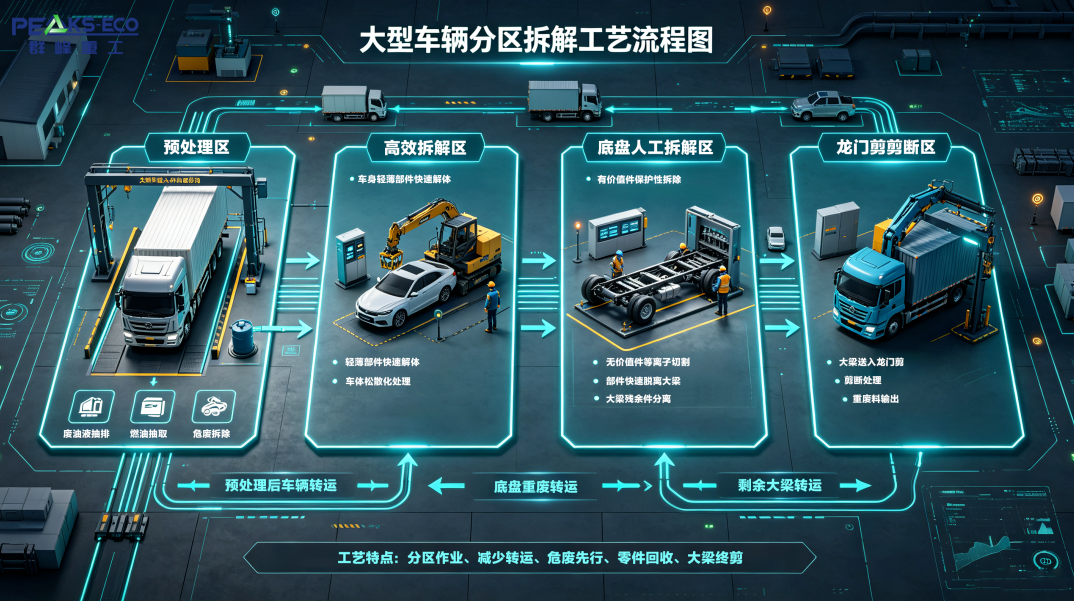
After pre-treatment, the vehicles are transferred directly to the high-efficiency dismantling area, where specialized dismantling machines rapidly process lightweight and sheet-metal components.
The remaining heavy-duty chassis is then transported to the manual chassis dismantling area. Valuable components are carefully removed using pneumatic tools to preserve their integrity and maximize their recovery value. Components with little or no reuse value are removed through destructive plasma cutting, allowing them to be quickly separated from the vehicle frame.
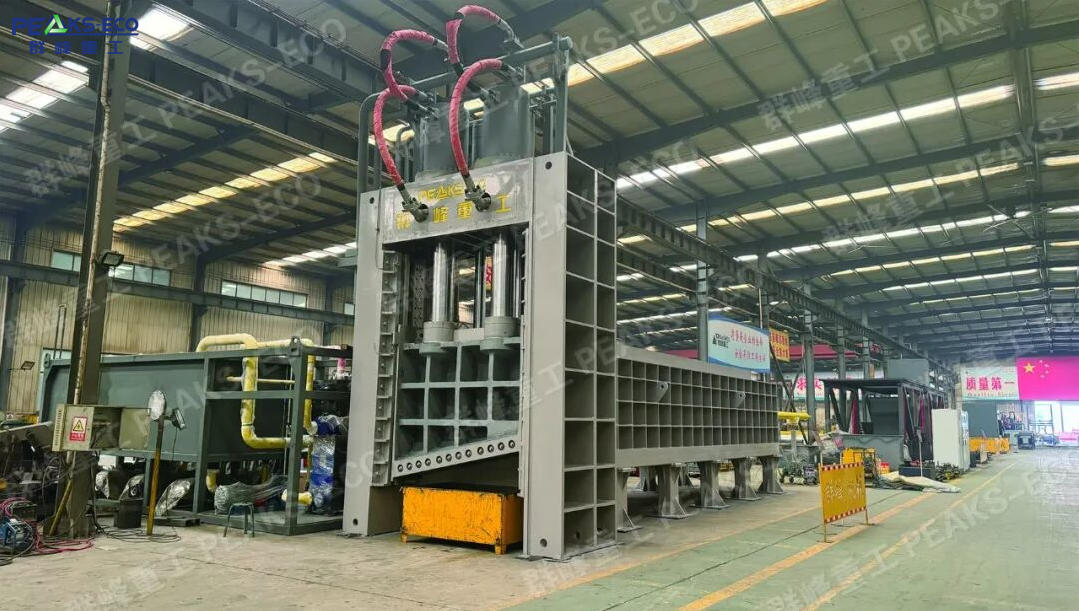
Finally, the remaining chassis frame is transferred to a gantry shear for cutting and further processing.
In the pre-treatment area, all residual vehicle fluids are drained, and hazardous components—including batteries, oil filters, and airbags—are safely removed. Once these procedures are completed, the pre-treatment stage is finished.
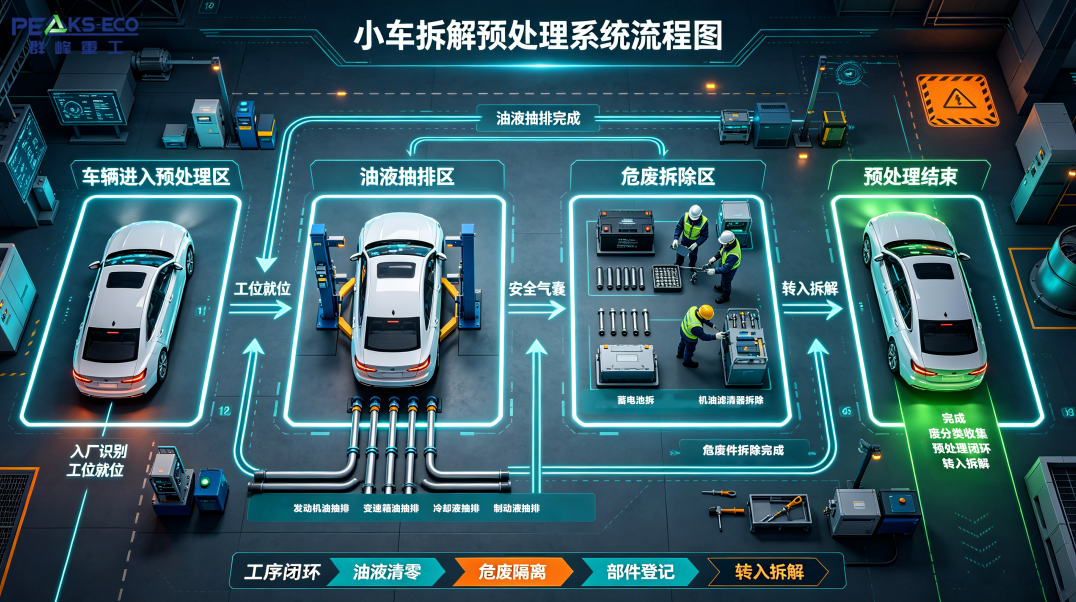
To improve dismantling efficiency, preserve component integrity, and maximize resource recovery and the residual value of end-of-life vehicles, PEAKS-ECO's precision dismantling solution adopts an assembly-line approach for recovering valuable components from small passenger vehicles.
Applicable Vehicle Types:
Passenger vehicles with up to 7 seats, including family cars.
Complete vehicles with sufficient component recovery value for precision dismantling.
Applicable Vehicle Dimensions:
Approximate maximum dimensions: 5,500 × 1,800 × 1,800 mm (L × W × H).
Dismantling Line Dimensions:
Approximately 45 × 8 × 7.5 m (L × W × H).
Customized layouts are available to accommodate different workshop conditions and production capacity requirements.
Precision Dismantling Process:
After pre-treatment, end-of-life vehicles are transported by forklift to the vehicle lifting and tilting platform, where precision dismantling operations begin.
The assembly-line configuration enables systematic component removal, improves workflow efficiency, and helps preserve the value of reusable automotive parts.
Small NEVs must undergo comprehensive safety inspections before dismantling. These include checking for fluid leakage, residual electrical voltage, and the integrity of battery connections.
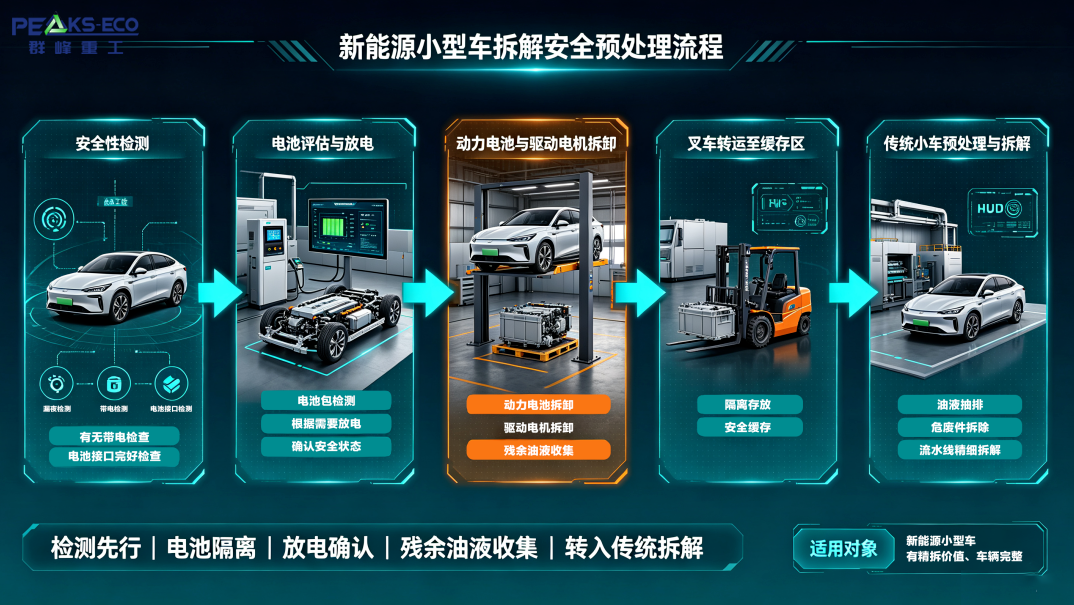
Specialized battery assessment equipment is used to evaluate the condition of the traction battery pack. Where necessary, controlled battery discharge procedures are carried out to ensure safe conditions for subsequent dismantling operations.
Following inspection, the traction battery and drive motor are removed. Any residual fluids contained within the battery and motor systems are also collected and properly handled.
Once the traction battery has been removed, the vehicle is transported by forklift to the designated buffer area. Subsequent pre-treatment and dismantling procedures follow the same general workflow used for conventional internal combustion engine passenger vehicles.
The automotive recycling systems developed and delivered by PEAKS-ECO are designed to minimize the environmental impact of end-of-life vehicles while maximizing resource recovery.
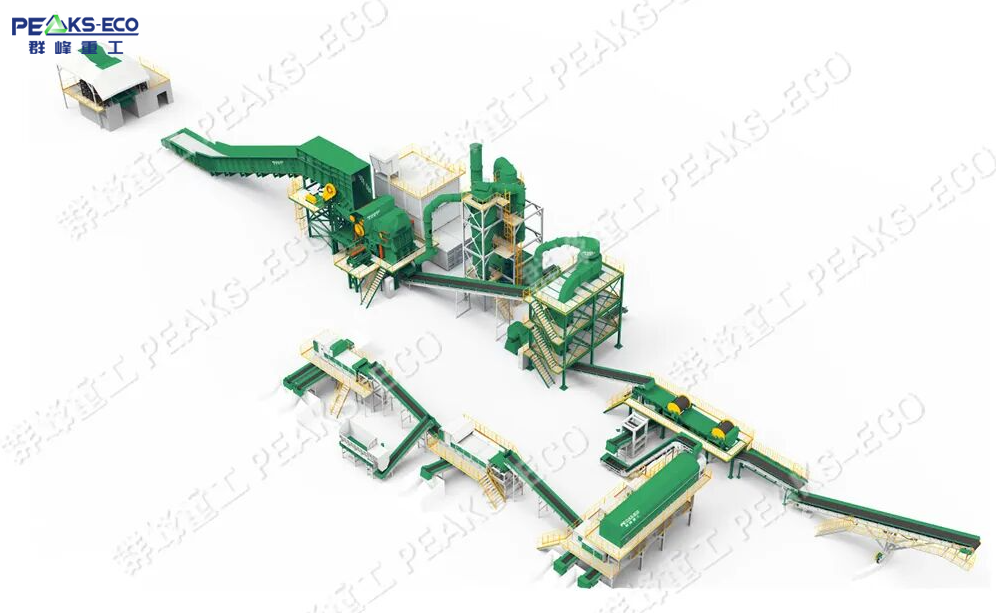
Throughout the vehicle dismantling process, PEAKS-ECO adheres to applicable environmental regulations and industry standards, employing environmentally responsible technologies and specialized equipment to ensure proper dismantling and treatment while preventing environmental pollution.
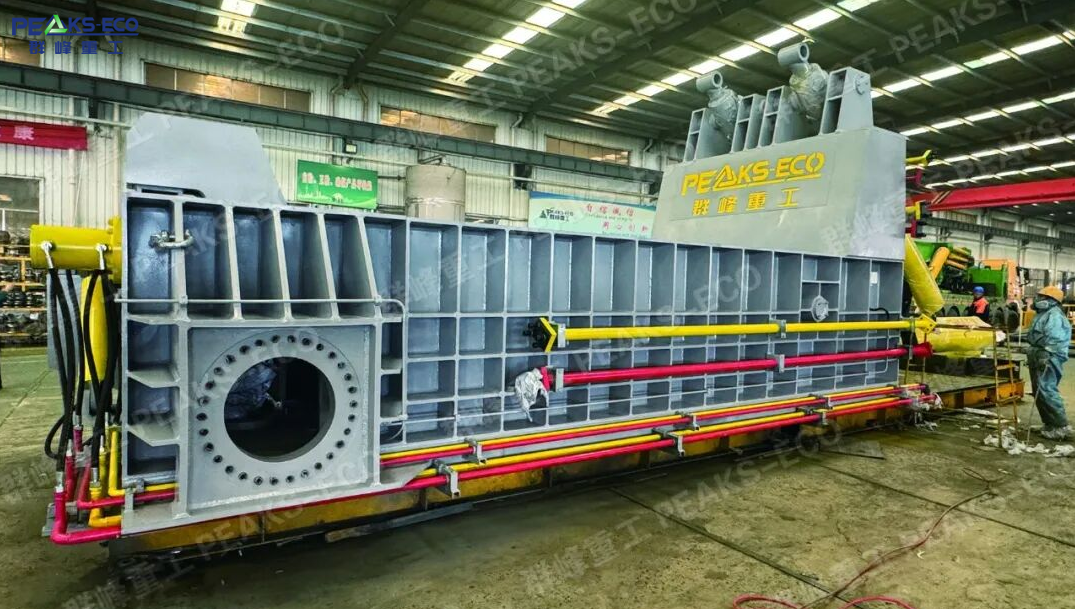
From initial vehicle classification and safety pre-treatment to high-efficiency heavy vehicle dismantling, precision passenger vehicle processing, and specialized NEV dismantling, every stage of a scientific and standardized ELV recycling system serves a clear purpose.
With a well-designed dismantling workflow, valuable components and recyclable materials can be recovered to their fullest potential, while operational safety and processing efficiency are significantly improved.