





Not every recycling project has the same material, working environment, or production requirements. A demolition site may need to process concrete and reinforced structures, while a wood recycling project may handle pallets and bulky timber. Mining and road construction projects can have completely different requirements again.
For these applications, a mobile shredder can provide an alternative to conventional fixed processing equipment. Instead of transporting all incoming materials to a permanent recycling facility, mobile equipment can be deployed closer to where the materials are generated.
However, choosing the right Mobile Shredder is not simply a matter of selecting the largest machine. The material characteristics, required output, site conditions, processing capacity, mobility, and downstream equipment all need to be considered.
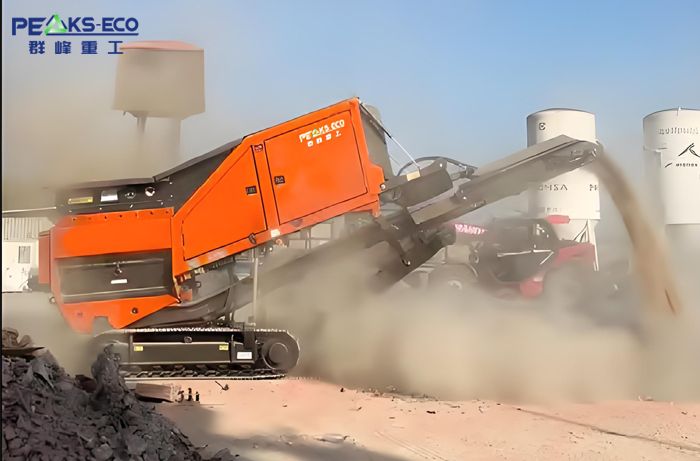
A mobile shredder can be used for a wide range of materials, but different materials place different demands on the machine.
Concrete and asphalt are hard and abrasive. Wood pallets are bulky and fibrous. Mixed construction waste may contain concrete, steel, wood, plastic, and other materials at the same time.
This means that the best equipment configuration for one project may not be appropriate for another.
A practical selection process should begin with five questions:
What material needs to be processed?
What is the maximum feed size?
What output size is required?
How much material needs to be processed?
Will the equipment need to move between different locations?
Once these factors are understood, the appropriate mobile processing solution becomes much easier to determine.
The main difference between mobile and fixed equipment is not simply size. It is the way the equipment is integrated into the project.
A fixed recycling plant is generally installed at a permanent location and connected to a complete processing line. This can be suitable when a large and stable volume of material is available at one site.
Mobile equipment, by contrast, can move with the project.
For construction, demolition, road, mining, and temporary recycling operations, this can provide an important operational advantage. Materials can be processed closer to their source, reducing the need to transport bulky untreated materials to another facility.
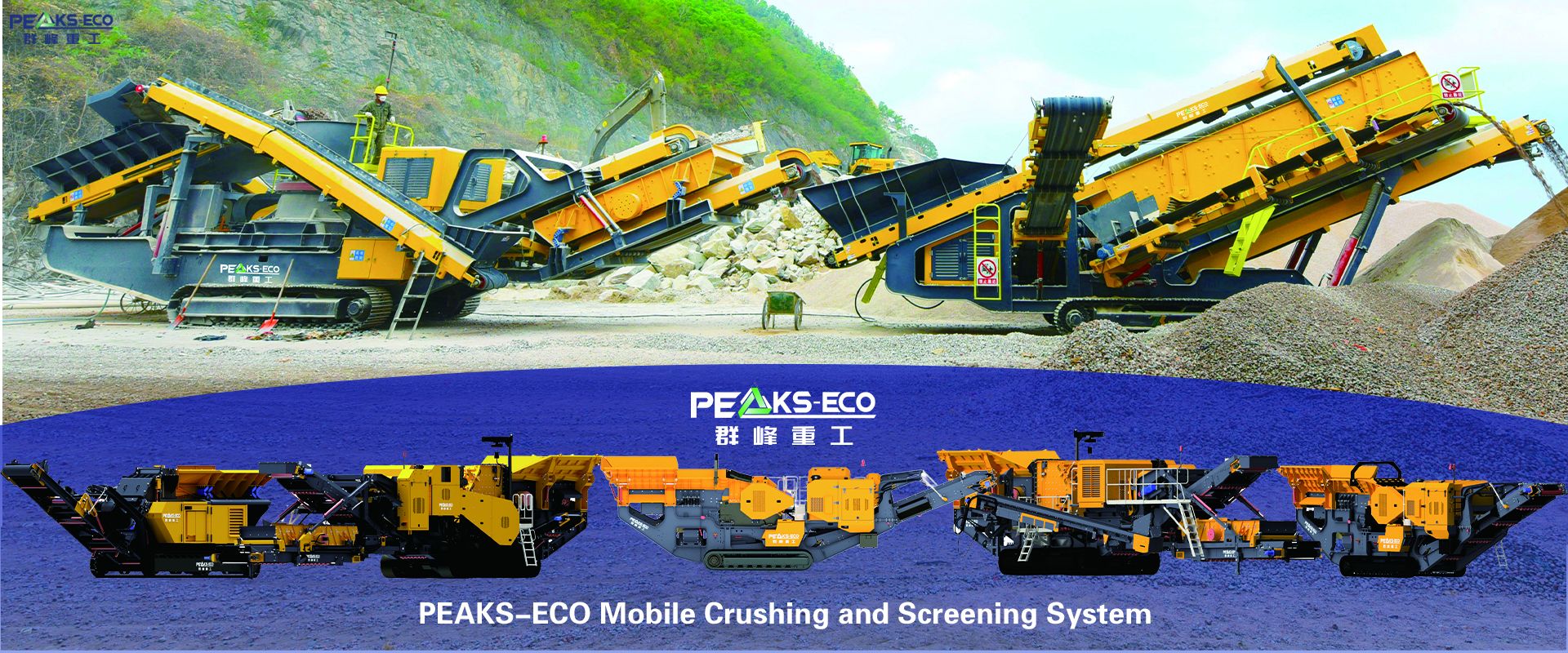
PEAKS-ECO's mobile product range includes mobile shredders, mobile crushers, mobile screening equipment, mobile conveyors, and mobile trommel screens, allowing different machines to be combined according to project requirements.
Construction waste is one of the most common applications for mobile size-reduction equipment.
A demolition site may generate concrete blocks, bricks, rubble, asphalt, reinforcement steel, and other materials. These materials are often large, irregular, and difficult to transport efficiently in their original form.
For hard and bulky construction materials, mobile jaw shredders and mobile impact shredders can be considered depending on the required processing method.
PEAKS-ECO lists mobile jaw shredders and mobile impact shredders for applications including urban construction waste treatment, highways, railways, bridges, and mining.
The right choice depends on the characteristics of the feedstock and the required final material.
A double-shaft shredder is particularly useful when the material requires strong shearing and tearing forces rather than simple crushing.
This type of equipment can be considered for bulky and mixed materials where reducing the size of the feedstock is the primary objective.
PEAKS-ECO's Mobile Double-shaft Synchronous Shredder S450 is designed as a primary shredder for materials including wood waste, wood pallets, asphalt, and concrete. It uses a track suspension and hook-lift design to improve mobility.
The company's newer mobile double-shaft synchronous shredder range also emphasizes synchronous dual-axis drive, intelligent control, and energy-saving operation.
For projects involving bulky materials or mixed waste, these characteristics can make a double-shaft configuration an option worth considering.
Wood recycling presents a different challenge from concrete recycling.
Wood waste may include:
Wooden pallets
Demolition timber
Branches and bulky wood
Packaging wood
Waste furniture
Industrial wood waste
These materials are generally lighter than concrete but can be long, bulky, and difficult to handle.
A mobile double-shaft shredder can be suitable for primary size reduction of bulky wood materials. Once the material has been reduced, it can be screened or processed further according to the required product size.
For temporary wood recycling projects, mobility can be particularly useful because the equipment can be moved between material accumulation points rather than requiring a permanent processing installation.
Asphalt is another material that can benefit from mobile processing.
Road reconstruction and maintenance projects often generate asphalt waste directly at the job site. Transporting large volumes of this material to a distant processing facility can add logistical complexity.
A mobile processing system can bring size-reduction equipment closer to the road project.
PEAKS-ECO lists asphalt among the materials suitable for its Mobile Double-shaft Synchronous Shredder S450.
Depending on the project, the shredded or crushed material can then be screened and prepared for further recycling or reuse.
Mining operations can also benefit from mobile processing equipment.
Material may need to be reduced or classified before entering subsequent crushing, screening, or processing stages. In large or changing mining operations, the ability to relocate equipment can provide greater flexibility than a completely fixed system.
PEAKS-ECO's mobile jaw and impact shredders are listed for mining applications, while its mobile screening equipment is designed for mining and construction-related material classification.
For mining projects, equipment selection should take into account material hardness, feed size, production requirements, wear conditions, and the desired downstream process.
Not necessarily.
In many projects, shredding is only one stage of the overall material-processing operation.
After size reduction, the material may still need to be screened, separated, conveyed, or further processed.
This is why a mobile shredder can be combined with other mobile equipment.
A typical mobile processing setup might include:
Mobile Shredder → Mobile Screen → Mobile Conveyor
A more complex system could include additional crushing, screening, and sorting equipment depending on the material and final product.
PEAKS-ECO's mobile product range includes mobile screen machines, mobile screen stations, mobile conveyors, and mobile trommel screens, making it possible to build a more complete mobile processing system.
Size reduction alone does not guarantee a usable final product.
After shredding or crushing, the material may contain particles of many different sizes. A mobile screen can classify these particles and separate the material according to the required size range.
PEAKS-ECO describes its mobile screen machine as equipment for screening and classifying materials in mining, construction, and highway construction applications. Its mobile screen station uses a self-propelled drive system and can be used for quarrying and building demolition waste screening.
Combining shredding and screening can therefore create a more complete on-site processing solution.
Mobility is one of the main reasons companies consider mobile processing equipment.
A project may have:
Multiple work areas
Temporary material sources
Changing demolition locations
Remote operating sites
Limited permanent infrastructure
Short project durations
In these situations, a fixed plant may require additional material transportation or site preparation.
A mobile machine can instead be positioned closer to the material source.
PEAKS-ECO offers mobile equipment using track-based or self-propelled configurations, depending on the machine type. Its mobile conveyor is also designed for fast setup and transportation, with a compact configuration that can be transported in a shipping container.
Transportation can become a major part of the cost of handling bulky waste.
Consider a demolition project where thousands of tons of concrete and mixed debris are generated. If all untreated material has to be transported to a remote processing facility, the project requires continuous truck movements.
With mobile processing, part of the material handling can take place at the source.
Instead of moving all bulky waste first, the project can process the material and then transport the resulting material according to the project's requirements.
This does not mean transportation is eliminated. Rather, the logistics can be reorganized around processed material instead of untreated bulky waste.
The desired output size is another important factor.
A project requiring coarse material may need only primary size reduction followed by screening.
A project requiring a smaller and more uniform product may need additional crushing or secondary processing.
Therefore, before selecting a mobile shredder, operators should define:
Maximum feed size
Target output size
Acceptable particle-size range
Required production capacity
Need for secondary processing
The equipment should then be selected as part of the complete process rather than as an isolated machine.
Capacity requirements vary significantly between projects.
A small temporary recycling project may prioritize compact equipment and easy relocation. A large demolition or infrastructure project may prioritize high throughput and continuous operation.
Selecting equipment with insufficient capacity can create bottlenecks and extend project timelines.
On the other hand, choosing equipment that is significantly larger than necessary can increase investment and operating costs without providing a corresponding benefit.
Capacity should therefore be matched to the actual material volume and project schedule.
Mobile equipment still requires suitable operating conditions.
Before deployment, operators should evaluate:
Ground conditions
Available operating space
Access roads
Material stockpile locations
Power requirements
Dust-control requirements
Noise restrictions
Weather conditions
Distance between processing stages
Track-mounted equipment can provide useful mobility on construction and uneven sites, but the actual ground conditions should always be evaluated before deployment.
Mobile shredding equipment is particularly attractive when flexibility is more important than permanent infrastructure.
Typical situations include:
The material source exists for a limited period, making permanent equipment less practical.
Material is generated along a changing construction corridor rather than at one fixed location.
Demolition waste may need to be processed close to densely developed areas.
Transporting waste to a distant fixed facility may create significant logistical challenges.
One recycling company may need to process materials at several different sites throughout the year.
Mobile equipment is not always the best option.
A fixed plant may be more suitable when:
Material is continuously available at one location
High-volume processing is required year-round
A permanent recycling facility already exists
Multiple processing stages need to be permanently integrated
Large storage and product-handling infrastructure is available
The choice should therefore be based on the entire business model rather than mobility alone.
The greatest potential of mobile equipment is not necessarily the individual machine. It is the ability to create a flexible processing system.
For example:
Stage 1: Mobile shredder reduces bulky feedstock.
Stage 2: Mobile screen separates material by size.
Stage 3: Mobile conveyor transfers different fractions.
Stage 4: Additional crushing or sorting is applied if required.
Stage 5: Qualified recycled materials are transported for reuse or further processing.
PEAKS-ECO's product portfolio includes mobile double-shaft synchronous shredders, mobile jaw shredders, mobile impact shredders, mobile screen machines, mobile screen stations, mobile conveyors, and mobile trommel screens.
This modular approach allows the processing system to be adapted to different materials and working environments.
Choosing the right Mobile Shredder starts with the project rather than the machine.
Concrete and asphalt projects may require equipment capable of handling hard and abrasive materials. Wood and pallet recycling may require a different shredding approach. Mixed demolition waste may benefit from combining size reduction with screening and additional separation.
Mobility is particularly valuable when material sources change, projects are temporary, or transporting untreated waste to a fixed facility is inefficient.
At the same time, a mobile shredder does not necessarily need to work alone. Combining shredders with mobile screens, conveyors, and other processing equipment can create a flexible on-site material-processing system.
PEAKS-ECO offers a range of mobile shredding, crushing, screening, and conveying equipment for construction, demolition, mining, road, and recycling applications. By selecting equipment according to material characteristics, output requirements, capacity, site conditions, and mobility needs, operators can develop a mobile processing solution that is better aligned with the realities of their individual projects.